I Thought Block Blast Would Be Easy. I Was Wrong.
Posted by Kimberly Miller
Filed in Entertainment 19 views
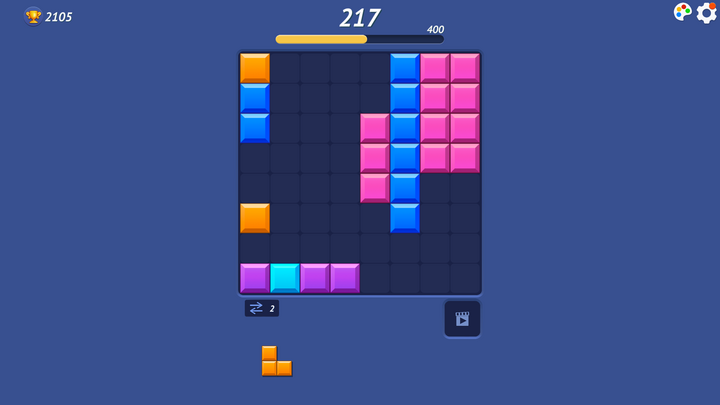
I found Block Blast completely by accident. A friend sent me a link and said, "It's just a simple puzzle game." Famous last words. A few hours later, I was still there, staring at a half-filled board, trying to figure out where a single L-shaped block would fit, and realizing I'd made a terrible decision three moves ago.
The game seemed straightforward at first. You get colorful block shapes sitting at the bottom of your screen. You drag them onto a grid. When you fill an entire row or column, it clears. That's it. That's the whole thing. How hard could it be?
Spoiler: it gets much harder.
The First Few Rounds Feel Impossible to Mess Up
When you first start playing Block Blast, you have so much space on the board that placement feels almost irrelevant. I'd just slap blocks down wherever they fit, clear lines constantly, and feel like a puzzle genius. The board was wide open. The pieces were flowing. I was certain I'd cracked the code.
Then the board started getting tighter.
That's when I realized something I should have known from the start: just because a block fits doesn't mean it should go there. I'd place what felt like an obvious piece, clear a couple of lines, and then notice I'd accidentally created these weird little gaps—isolated spaces that no future piece could ever fill. They'd sit there, taunting me, slowly draining my available space until my perfectly full board turned into an unusable mess.
When One Bad Move Changes Everything
This is the moment Block Blast stops feeling cute and starts feeling genuinely strategic.
I was playing what I thought was a solid game when I had a L-shaped block and an inviting gap in the middle-left of my board. It looked perfect. One move, quick clear, momentum going. So I dropped it without really thinking.
Within three or four more placements, the board started closing in. That gap I'd carelessly filled? It was actually important. The space around it had been flexible—I could've adapted later. Instead, I'd locked myself into a corner, and none of my new pieces fit comfortably. I lost that game faster than I wanted to admit.
That's when I started actually thinking about Block Blast instead of just playing it. I realized the pieces at the bottom aren't just individual decisions—they're a group. Before I place the first block, I should look at what I've got coming up. Where can I fit these pieces together? What areas of the board can stay open? What if I need space for a big, awkward piece three moves from now?
The No-Timer Thing Changed My Whole Approach
Here's what saved me: there's no countdown clock ticking away. No pressure to place blocks quickly. No flashing warnings that time is running out. This sounds like a small thing, but it's genuinely liberating.
Instead of panic-placing blocks to beat a timer, I actually started planning. I'd look at the three or four pieces waiting in the queue and think about the board as a whole. What areas should stay clear? Should I try to clear this row now, or would it be smarter to save that space for later?
Taking time to think about moves ahead made a massive difference. Suddenly I wasn't just reacting to the board state—I was trying to control it.
The Moment Everything Clicks
The best part of Block Blast is when one placement clears multiple rows or columns at once. It's not just satisfying—it actually happens. You can set yourself up for these moments. You can place blocks strategically so that when the right piece arrives, a single move cascades and clears huge sections of the board.
I had a game where I'd been carefully managing my space for several minutes, creating this nice aligned setup with gaps that were only four or five blocks wide. Then I got exactly the piece I needed. One drag, one drop—and suddenly half my board lit up and cleared. I felt like I'd actually accomplished something, not just been lucky.
What I Got Wrong (And You Probably Will Too)
I've definitely made some moves that haunt me. The biggest one? Prioritizing a quick clear over board control. I'd see a nearly complete row and immediately fill it without checking if I was creating islands of dead space around it. Quick clears feel good. Board management is boring until you run out of moves and realize you're trapped.
I also learned that corners aren't always your friends. They look like good anchor points, but isolated corners can be hard to fill efficiently. Sometimes it's better to leave them empty longer than to lock yourself into a corner strategy early on.
And yeah, I've played "just one more game" at least a dozen times when I meant to stop. Each game is quick enough to feel like no time has passed, but engaging enough that you actually care about how you're doing.
Tips I'd Give Myself (And You)
Look at all your available pieces before placing the first one. Think about what spaces you absolutely need to keep open. Avoid creating tiny isolated gaps—they're harder to fill than you'd think. And remember that sometimes saving space is more important than chasing that satisfying line clear.
Also, just accept that you'll lose sometimes. Even when you're being strategic, the pieces don't always cooperate. The beauty of having no timer is that you can just shrug, start another game, and try again.
Come Play With Me
If you haven't tried Block Blast yet, head over to Block Blast and see what I'm talking about. It really is free, no download required, and you can play right in your browser.
And hey, if you do start playing, let me know. I'm curious to see if you figure out the board management thing faster than I did, or if you end up frustrated with the same mistakes I made. Maybe we can compare strategies or just see who can keep their board open the longest. Either way, it's a solid way to pass some time without anyone yelling at you to hurry up and make your move.