Pain O Soma and Muscle Discomfort After a Day of Heavy Chores
Posted by yana James
Filed in Health 29 views
A day of heavy household chores can be surprisingly demanding on the body. Cleaning, moving furniture, carrying laundry, scrubbing floors, gardening, lifting boxes, rearranging rooms, and other household tasks can involve repeated bending, lifting, reaching, pushing, pulling, and prolonged standing.
After several hours of physical work, it is common to notice tired or uncomfortable muscles. The lower back, shoulders, arms, hips, thighs, and legs may feel sore, tight, heavy, or fatigued. In some cases, a demanding chore can also lead to a muscle strain, particularly when a heavy object is lifted suddenly or with poor technique.
Understanding the difference between ordinary muscle fatigue and a possible injury can help determine when simple recovery may be appropriate and when professional medical advice is needed.
Why Heavy Chores Can Cause Muscle Discomfort
Household tasks often involve movements that are repeated for longer than expected. A person may begin with one chore and gradually spend several hours performing physically demanding activities.
Some common contributors to muscle discomfort include:
- Repeated bending and straightening
- Lifting heavy boxes or furniture
- Carrying laundry, groceries, or household supplies
- Pushing or pulling heavy objects
- Scrubbing floors or surfaces
- Reaching overhead
- Working in awkward positions
- Climbing stairs repeatedly
- Gardening and yard work
- Standing for extended periods
- Performing unfamiliar physical tasks
- Taking too few breaks
A sudden heavy lift can cause an acute muscle strain, while repeatedly performing the same movement can place ongoing stress on a muscle over time.
Common Chores That May Lead to Muscle Pain
Moving Furniture
Rearranging a bedroom, living room, or office can involve lifting, pushing, pulling, and twisting. Furniture can be particularly challenging because it may be both heavy and awkward to handle.
Trying to move large objects without assistance can increase the physical demands placed on the back, shoulders, and legs.
Deep Cleaning
Deep cleaning may involve scrubbing floors, washing windows, vacuuming, moving objects, and repeatedly bending or reaching.
Even when individual movements are not especially heavy, performing them continuously for several hours can contribute to muscle fatigue.
Laundry and Household Carrying
Carrying baskets of laundry, boxes, groceries, or cleaning supplies can place repeated demands on the arms, shoulders, back, and legs.
Carrying loads up or down stairs may increase the overall physical workload.
Gardening and Yard Work
Digging, pulling weeds, carrying soil, trimming plants, mowing, and moving outdoor equipment can involve repeated lifting and bending.
People who do not regularly perform these activities may notice more muscle soreness after an unusually demanding gardening session.
Home Organization
Cleaning out a garage, basement, attic, or storage area often involves sorting, lifting, reaching, squatting, and carrying.
Because these projects can take several hours, muscle fatigue may gradually increase without the person noticing.
Where Does Muscle Discomfort Usually Occur?
The affected area often depends on the type of chores performed.
Lower Back
Repeated bending, lifting, carrying, and twisting can place significant demands on the lower back.
Shoulders and Upper Back
Cleaning windows, reaching shelves, lifting objects, and working overhead can contribute to shoulder and upper-back discomfort.
Arms and Forearms
Scrubbing, carrying, gripping tools, and repetitive cleaning movements can cause temporary fatigue or tightness in the arms and forearms.
Hips and Thighs
Squatting, climbing stairs, lifting, and repeatedly standing up can place stress on the hips and thighs.
Calves and Feet
Walking around the house for hours, climbing stairs, and prolonged standing can leave the legs and feet feeling tired or uncomfortable.
Muscle Fatigue, Soreness, or Strain?
It is important not to assume that every type of discomfort represents an injury.
Muscle fatigue can occur after prolonged physical activity. The muscles may feel tired, heavy, or weak and often improve with adequate recovery.
Muscle soreness may develop after an activity that is more demanding or unfamiliar than usual.
Muscle tightness may create a stiff or restricted feeling, particularly after repetitive movements or maintaining an awkward position.
Muscle strain is an actual injury involving a muscle or tendon. Symptoms can include pain or tenderness, limited movement, swelling, muscle spasms, and weakness.
The way the discomfort began can provide useful information. Gradual aching after several hours of chores may be different from sudden sharp pain that occurs during a specific lifting or twisting movement.
What Can Help After a Heavy Chore Day?
The appropriate recovery approach depends on the cause and severity of the symptoms.
Reduce Activities That Increase Pain
If a particular movement makes the discomfort worse, temporarily reduce or avoid that activity.
Continuing to perform the same strenuous movement despite increasing pain may place additional stress on the affected area.
Give Your Muscles Time to Recover
After an unusually demanding day, adequate rest can help the body recover. Avoid immediately following one heavy chore session with another equally demanding session if symptoms are still present.
Keep Movement Comfortable
Complete inactivity is not always necessary. Gentle movement may be appropriate if it does not increase symptoms. However, activities that clearly worsen pain should be avoided.
Consider P.R.I.C.E. for an Acute Strain
For an acute muscle strain, initial care can include protection, rest, ice, compression, and elevation, commonly referred to as the P.R.I.C.E. approach. Mayo Clinic recommends stopping activities that cause pain or swelling while allowing light movement when it does not make symptoms worse.
Return to Chores Gradually
Once symptoms improve, resume demanding household activities progressively rather than immediately returning to a full day of heavy work.
Where Pain O Soma May Fit
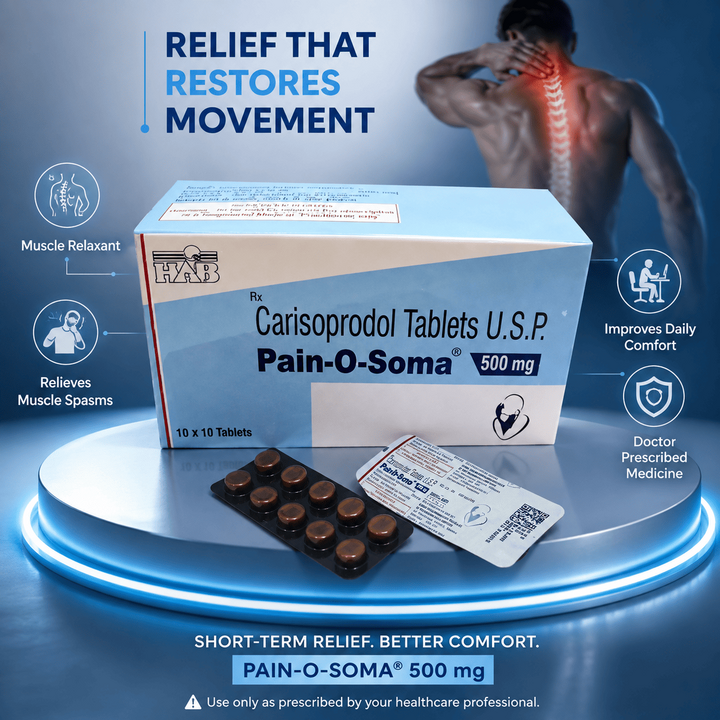
Pain O Soma contains carisoprodol, a prescription skeletal muscle relaxant. In U.S. labeling, carisoprodol is indicated for relief of discomfort associated with acute, painful musculoskeletal conditions in adults. It is intended for short-term treatment, generally limited to two or three weeks.
This does not mean Pain O Soma is appropriate for ordinary muscle fatigue after cleaning the house, gardening, or moving a few boxes.
Whether carisoprodol is appropriate depends on the underlying condition and a healthcare professional's assessment. Treatment for an acute musculoskeletal problem may also involve rest, activity modification, physical therapy, and other appropriate measures.
Pain O Soma 350 mg and Safety Considerations
Current U.S. SOMA labeling includes 250 mg and 350 mg tablets, with a recommended dose range of 250–350 mg three times daily and at bedtime. The actual medication, dose, and duration should be determined by a qualified healthcare professional.
Carisoprodol can cause drowsiness and dizziness and may impair the ability to perform tasks requiring alertness. This is especially important when household work involves ladders, power tools, driving, or other potentially hazardous activities.
Alcohol and other central nervous system depressants can increase sedative effects. Carisoprodol also carries risks involving abuse, dependence, withdrawal, and seizures.
Anyone prescribed carisoprodol should:
- Take it only as prescribed.
- Avoid changing the dose without medical advice.
- Be cautious with driving or operating machinery.
- Avoid alcohol unless specifically advised otherwise.
- Tell a healthcare professional about other medications or substances being used.
- Never share prescription medication.
How to Prevent Muscle Discomfort During Heavy Chores
A few practical changes can make demanding household work easier on the body.
Break Large Projects Into Smaller Tasks
Instead of attempting to clean, move furniture, organise storage, and complete yard work in one day, divide the workload across multiple sessions when possible.
Use Proper Lifting Technique
Avoid twisting while lifting heavy objects. Ask for assistance when an item is too heavy or awkward to move safely.
Alternate Activities
Switching between different types of chores can reduce continuous stress on the same muscle groups.
For example, alternate a physically demanding task with a lighter activity rather than spending several hours performing the same repetitive movement.
Take Regular Breaks
Short breaks can help prevent excessive fatigue, particularly during long cleaning or home-organization projects.
Use Helpful Equipment
Carts, moving aids, appropriate tools, and other equipment may reduce the amount of force required for certain household tasks.
Increase Activity Gradually
If you have not performed physically demanding chores recently, avoid suddenly completing an entire day of heavy work.
When Should You Seek Medical Advice?
Many mild episodes of muscle discomfort improve with appropriate recovery. However, some symptoms deserve professional attention.
Consider seeking medical advice if:
- Pain is severe or getting worse.
- Symptoms do not improve.
- Significant swelling develops.
- There is noticeable muscle weakness.
- You have difficulty using the affected area.
- Numbness or tingling occurs.
- Pain started with a sudden injury.
- You cannot walk or move normally.
- The same symptoms repeatedly return.
Mayo Clinic recommends medical evaluation when symptoms worsen, pain is serious or not improving, numbness or tingling develops, or it becomes difficult to use the injured muscle.
Researching Pain O Soma Online
When researching prescription medications online, consumers should consider pharmacy credentials, prescription requirements, product labeling, manufacturer information, and applicable regulations rather than relying only on price or product availability.
Safe4Cure can provide healthcare-product and medication information as an online pharmacy platform. Anyone considering a prescription medicine such as carisoprodol should verify the pharmacy's credentials and prescription requirements and consult a qualified healthcare professional before use.
Final Thoughts
A full day of heavy chores can place considerable stress on the muscles. Moving furniture, deep cleaning, gardening, carrying household items, and organizing storage areas can involve repeated lifting, bending, pushing, pulling, and reaching.
Mild muscle fatigue or soreness may improve with rest, comfortable movement, and adequate recovery. A suspected acute strain may require activity modification and appropriate initial care.
Pain O Soma (carisoprodol) is a prescription muscle relaxant used for certain acute, painful musculoskeletal conditions in adults. It is not intended as a routine solution for everyday muscle fatigue after household chores. Because carisoprodol can cause sedation and carries risks related to misuse and dependence, it should be used only under appropriate medical guidance.
Planning demanding chores, taking regular breaks, using safe lifting techniques, and giving the body enough recovery time can help make physically demanding household work safer and more manageable.