How to Teach Kids About Telling Time With Fun Games
Posted by Fahad Rizwan
Filed in Other 14 views
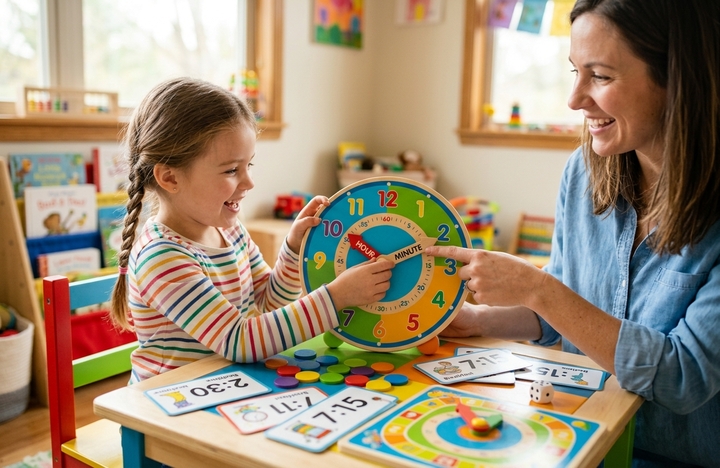
Learning to tell time is an important skill for children because it helps them understand daily routines, schedules, and the concept of passing time. However, learning how to read a clock can sometimes feel difficult or boring for young learners. Parents and teachers can make the process much easier by turning practice into an enjoyable activity.
How to Teach Kids About Telling Time With Games is a useful approach because games combine learning with entertainment. Children can practise identifying numbers, understanding clock hands, reading different times, and connecting times with everyday activities without feeling like they are completing a traditional lesson.
Why Is Learning to Tell Time Important for Kids?
Understanding time helps children become more independent. Once children can read a clock, they can understand when it is time to wake up, go to school, eat meals, complete homework, play, and go to bed.
Telling time also supports important mathematical skills. Children learn about numbers, counting, addition, subtraction, patterns, and sequences while working with clocks. For example, understanding that five minutes have passed between 3:00 and 3:05 introduces children to counting by fives.
Learning time also encourages children to follow routines. When children understand schedules, they can gradually develop better awareness of responsibilities and time management.
How Can Games Make Telling Time Easier?
Games provide children with repeated practice in a relaxed environment. Instead of simply asking a child to read a clock repeatedly, parents can introduce challenges, races, matching activities, and pretend-play situations.
Games can also be adjusted according to a child's age and ability. Younger children may begin by learning the numbers and recognising the hour hand, while older children can practise minutes, quarter hours, half hours, and more complex time problems.
The key is to introduce one concept at a time and allow children to build confidence before moving to a more difficult level.
Start With a Simple Clock Game
A simple homemade clock can be one of the best tools for teaching time. Use a paper plate or cardboard circle and mark the numbers from 1 to 12. Add two movable hands so the child can change the time.
Start by teaching the difference between the hour hand and minute hand. Explain that the shorter hand shows the hour while the longer hand shows the minutes.
Call out a time such as 4:00 and ask the child to move the hands into the correct position. Then switch roles and move the hands yourself while asking the child to identify the time.
This activity gives children hands-on practice and helps them understand how the hands work together.
Play the Time Matching Game
Time matching is another simple activity for young learners. Create cards containing different clock faces and separate cards showing digital times.
For example, one card might show an analogue clock displaying 7:30 while another card says 7:30. Mix all the cards and ask the child to find the matching pairs.
To make the game more challenging, include times such as 2:15, 5:45, 8:20, and 10:50.
This game helps children connect analogue and digital clocks while improving their recognition skills.
Try a Time Bingo Game
Bingo can turn time practice into an exciting family activity. Create bingo cards containing different times. Instead of calling numbers, the parent or teacher calls out times.
For example, say "three o'clock" or "six thirty." Children look at their cards and mark the matching time.
For advanced learners, show an analogue clock instead of saying the time aloud. Children must read the clock before checking their cards.
Time bingo is particularly useful because it allows children to practise several different times in a single activity.
Use a Daily Routine Game
Children often understand time better when it is connected to things they already do. Create cards representing activities such as waking up, eating breakfast, going to school, doing homework, playing, and going to bed.
Give each activity a time and ask the child to arrange the cards in the correct order.
For example:
- Wake up at 7:00
- Eat breakfast at 7:30
- Go to school at 8:00
- Do homework at 4:00
- Go to bed at 8:30
Ask questions such as, "What happens at 4:00?" or "What time do you go to bed?" This makes learning more meaningful because children can connect clock reading with their own lives.
Create a Time Treasure Hunt
A treasure hunt can make learning especially engaging. Hide cards around the room, each containing a different time or clock face.
Give children clues such as, "Find the card that shows half past three." Once they find it, provide another clue.
For younger children, use whole hours first. As their skills improve, introduce half hours, quarter hours, and five-minute intervals.
This activity combines movement, problem-solving, and time recognition.
Play Guess the Time
Guessing games encourage children to think carefully about the position of clock hands. Move the hands on a teaching clock and ask, "What time is it?"
After the child answers, ask another question such as, "What will the time be in one hour?"
For example, if the clock shows 2:00, the child might answer 3:00 as the time one hour later.
Older children can practise questions involving 15 or 30 minutes. This helps develop their understanding of elapsed time.
Turn Time Learning Into Pretend Play
Pretend play is an effective way to make time relevant. Children can pretend to run a school, restaurant, shop, or travel station.
For example, create a pretend bus schedule with departure times. Ask the child when the next bus leaves or how long they need to wait.
A pretend school schedule could include lessons at different times. Children can read the schedule and determine what activity comes next.
These activities show children that telling time is a practical skill rather than simply something they need to memorise.
Make the Games Age Appropriate
Children learn at different speeds, so games should match their current ability.
Young children can start with:
- Recognising numbers on a clock
- Identifying the hour hand
- Learning whole hours
- Matching clocks with simple times
Once they are comfortable, introduce:
- Half hours
- Quarter hours
- Five-minute intervals
- Digital and analogue time
- Time before and after an event
- Elapsed time
Avoid introducing too many concepts at once. Short, regular practice sessions are often more effective than long lessons.
Encourage Children Instead of Correcting Constantly
Making mistakes is a normal part of learning. If a child gives an incorrect answer, avoid making the experience stressful. Instead, ask questions that help them discover the answer.
For example, if a child says a clock shows 5:00 when the minute hand is pointing at six, ask, "Where is the minute hand pointing? What does that number tell us?"
Positive encouragement can help children become more confident. Celebrate progress, even when the improvement is small.
Use Everyday Opportunities to Practise
You do not always need a formal game to practise telling time. Everyday activities provide plenty of opportunities.
Ask children to check the clock before leaving for school, determine how long until dinner, or identify the time shown on a digital clock.
You can also ask questions such as, "It is 3:00 now. What time will it be in one hour?" These quick questions turn ordinary moments into learning opportunities.
Conclusion
Teaching children to tell time does not have to be complicated or repetitive. Games can make the process enjoyable while giving children valuable opportunities to practise reading clocks, understanding minutes, recognising routines, and calculating elapsed time.
From simple clock-making activities and matching games to bingo, treasure hunts, pretend play, and daily routine challenges, there are many ways to make time learning interactive. The most effective approach is to keep activities appropriate for the child's age, introduce concepts gradually, and provide plenty of encouragement.
When children associate learning with fun and practical experiences, they are more likely to develop confidence and remember what they have learned. With regular game-based practice, telling time can become an enjoyable skill that children use naturally in everyday life.